Given the root of a binary tree, return an array of the largest value in each row of the tree (0-indexed).
Example 1:
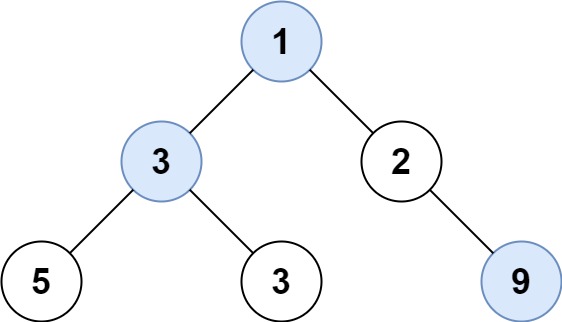
1
2
| Input: root = [1,3,2,5,3,null,9]
Output: [1,3,9]
|
Example 2:
1
2
| Input: root = [1,2,3]
Output: [1,3]
|
题目大意
给定一棵二叉树的根节点 root,返回一个数组,其中每个元素是二叉树对应行(从 0 开始索引)中的最大值。
例如:
- 输入二叉树
[1,3,2,5,3,null,9],第 0 行最大值为 1,第 1 行最大值为 3,第 2 行最大值为 9,因此返回 [1,3,9]。
解题思路
要找到每一行的最大值,核心是按层遍历二叉树,并在遍历过程中记录每层的最大值。具体步骤如下:
- 层序遍历初始化:若根节点为空,直接返回空数组;否则将根节点入队。
- 逐层处理节点:
- 记录当前队列大小(即当前层的节点总数
levelSize),用于控制只处理当前层的节点。
- 初始化当前层的最大值
maxVal(可设为当前层第一个节点的值,再与其他节点比较)。
- 遍历当前层的所有节点:
- 取出队首节点,比较其值与
maxVal,更新 maxVal 为两者中的较大值。
- 将节点的左、右子节点入队(为下一层遍历做准备)。
- 当前层处理完毕后,将
maxVal 加入结果集。
- 遍历结束:所有层处理完成后,返回结果集。
代码实现
1
2
3
4
5
6
7
8
9
10
11
12
13
14
15
16
17
18
19
20
21
22
23
24
25
26
27
28
29
30
31
32
33
34
35
36
37
38
39
40
41
42
43
44
45
46
47
48
49
50
51
| /**
* Definition for a binary tree node.
* struct TreeNode {
* int val;
* TreeNode *left;
* TreeNode *right;
* TreeNode() : val(0), left(nullptr), right(nullptr) {}
* TreeNode(int x) : val(x), left(nullptr), right(nullptr) {}
* TreeNode(int x, TreeNode *left, TreeNode *right) : val(x), left(left), right(right) {}
* };
*/
class Solution {
public:
vector<int> largestValues(TreeNode* root) {
vector<int> result;
if (root == nullptr) { // 边界条件:空树返回空数组
return result;
}
queue<TreeNode*> q;
q.push(root); // 根节点入队,启动层序遍历
while (!q.empty()) {
int levelSize = q.size(); // 当前层的节点总数
int maxVal = INT_MIN; // 初始化当前层最大值为最小整数
// 遍历当前层的所有节点
for (int i = 0; i < levelSize; ++i) {
TreeNode* curr = q.front();
q.pop();
// 更新当前层的最大值
if (curr->val > maxVal) {
maxVal = curr->val;
}
// 下一层节点入队
if (curr->left != nullptr) {
q.push(curr->left);
}
if (curr->right != nullptr) {
q.push(curr->right);
}
}
result.push_back(maxVal); // 将当前层最大值加入结果集
}
return result;
}
};
|